
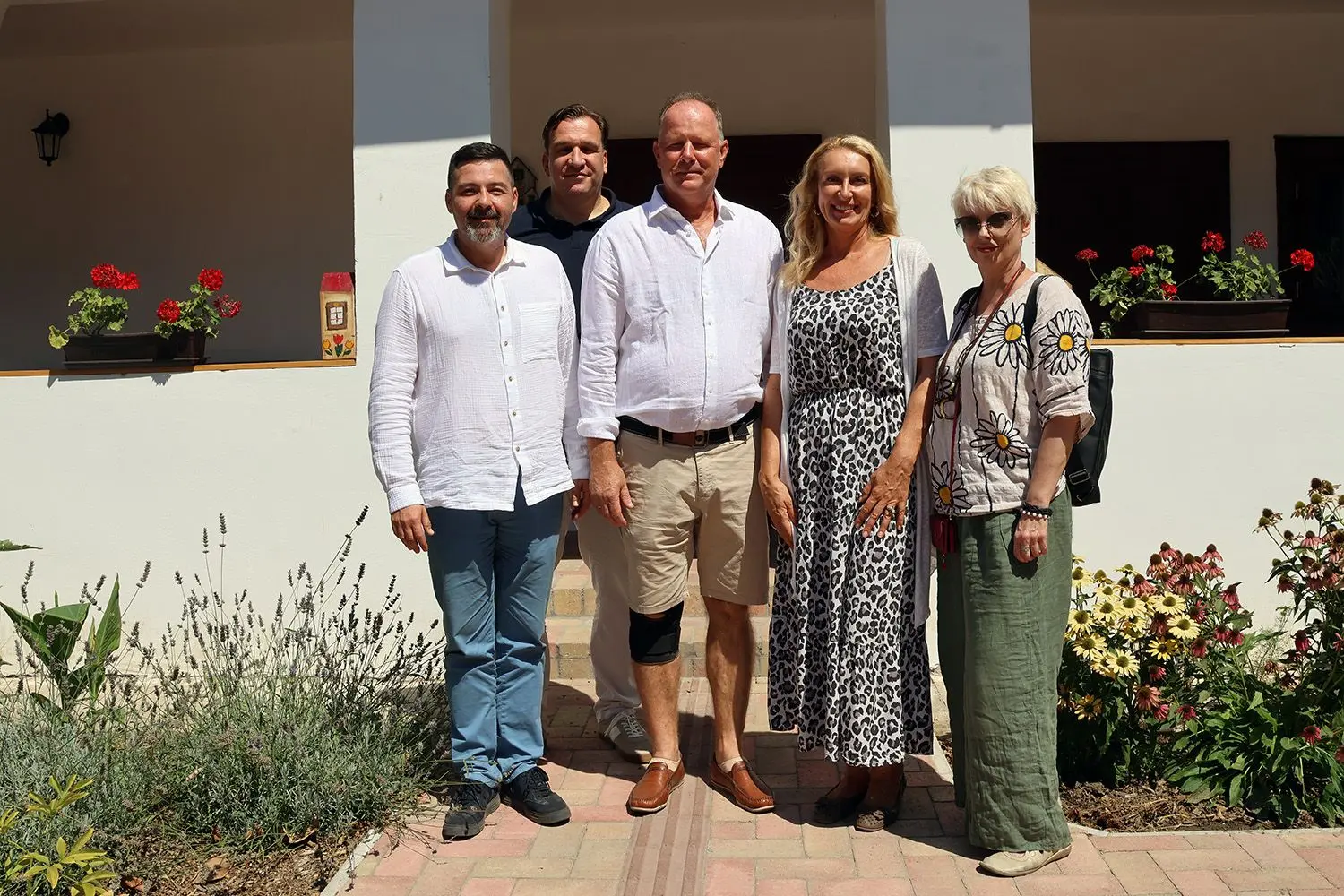
Delegation of the Ministry of European Integration, led by Nemanja Martinović, Acting Assistant Minister and Head of the National Authority of the Republic of Serbia responsible for the implementation of the Interreg IPA CBC Hungary-Serbia Programme, together with the representatives of the Joint Secretariat Antenna from Subotica, visited two projects implemented under the First Public Call of the Programme on 5 August 2026.
The first visit was organised in the town of Deszk, where the lead beneficiary of the FolkReAct project, the Serbian Cultural Association “Banat”, presented the results of the project aimed at preserving, improving and promoting folk cultural heritage as a basis for the development of sustainable tourism in the border region.
The Delegation was welcomed by the president of the association, Kristifor Brcan, who presented the investments made in the rehabilitation and decoration of the ethno house, courtyard and accompanying facilities. The new and rehabilitated facilities are now used for organising workshops, camps, and traditional events, such as the “Ajvar Festival”, thereby contributing to the preservation of cultural identity and strengthening of the local community. The visit once again confirmed how European funds can have a strong and long-term impact when invested into the projects corresponding to the actual needs of the local population.
The second visit took place in Algyő, where the Delegation visited the Best Wastewater project, dedicated to improving wastewater management and protecting the Tisza River. The rehabilitated anaerobic wastewater treatment lagoon was presented in the presence of the project team, alongside a specialised vehicle for maintaining and cleaning the sewerage network, purchased as part of the project. These investments significantly improve the capacities of local utility services and contribute to reducing the risk of environmental pollution through more efficient wastewater management.
The general impression after the tour is that the projects are being implemented in accordance with planned dynamics and envisaged capacities, with visible and measurable results in the field. The achieved effects confirm that the projects financed through the Interreg IPA CBC Hungary-Serbia Programme are largely contributing to the achievement of the Programme's objectives, the strengthening of cross-border cooperation and the balanced, sustainable development of the border region.


