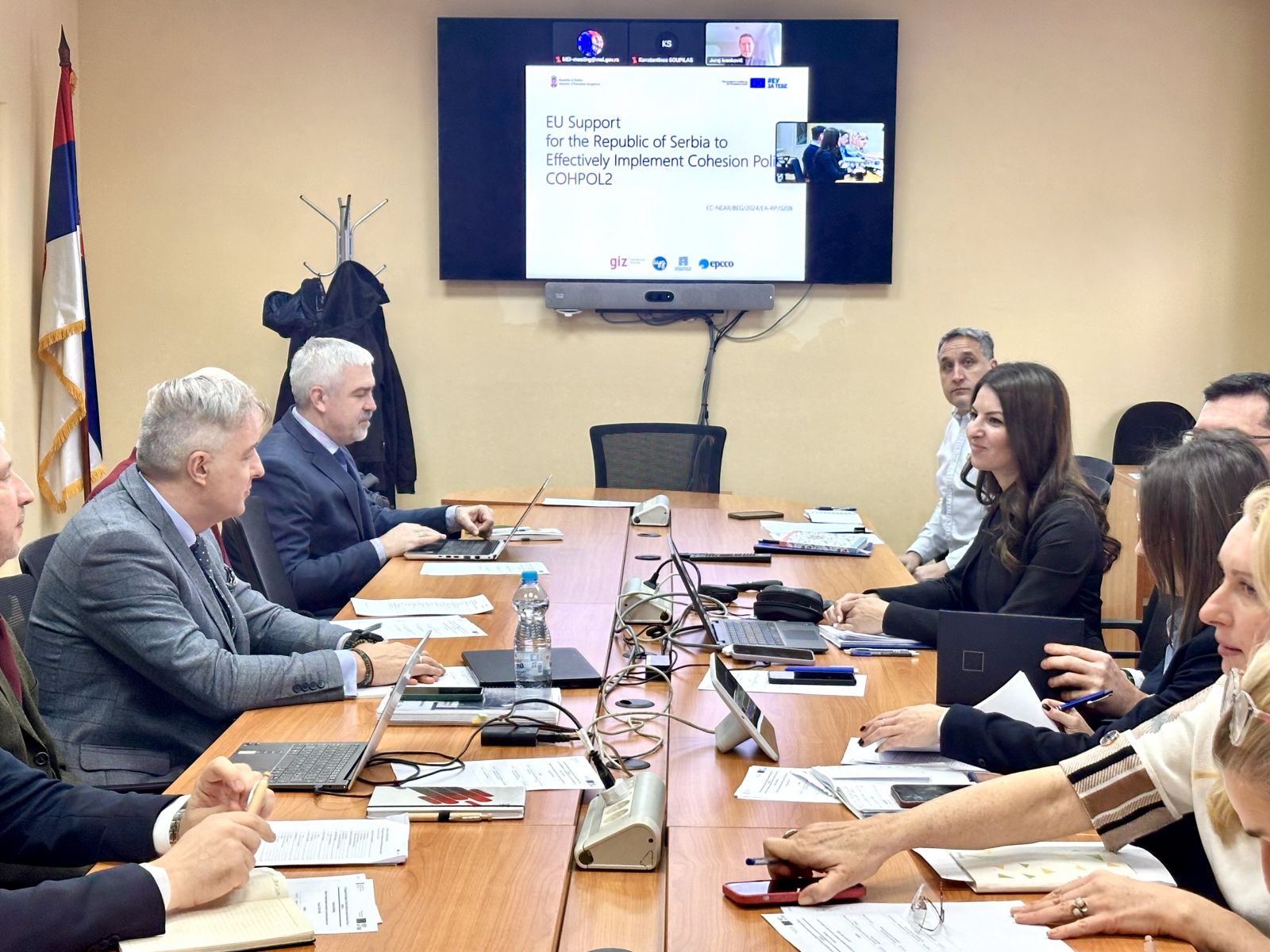
The kick-off meeting of the project “EU Support to the Republic of Serbia for Effective Implementation of Cohesion Policy – COHPOL 2” was held yesterday at the Ministry of European Integration, officially marking the start of the project’s implementation. The project is aimed at further strengthening the administrative and institutional capacities of the Republic of Serbia for the implementation of the European Union’s Cohesion Policy. The planned duration of the project is 36 months.
The project is implemented with financial support from the European Union under the Instrument for Pre-Accession Assistance (IPA 2024), in cooperation with the Delegation of the European Union to the Republic of Serbia. The Ministry of European Integration acts as the main beneficiary and the key national institution responsible for project coordination and activities related to Chapter 22 – Regional Policy and Coordination of Structural Instruments. Project implementation is carried out by GIZ, in consortium with ARCHIDATA, WYG, and EPPCO.
During the meeting, the key components of the project, the planned timeline, and the expected results were presented, with a particular focus on strengthening the management and implementation system for Cohesion Policy in line with the EU legal framework and best practices. Participants exchanged views on work organization, coordination mechanisms with relevant national institutions, partners, and future beneficiaries of EU funds. The first operational steps and priority activities to be implemented in the upcoming period were also defined.
It was concluded that the COHPOL 2 project represents an important contribution to the continued support of the European Union to the Republic of Serbia in building capacities for the implementation of Cohesion Policy, improving planning and programming processes, and strengthening the institutional framework for the effective implementation of development policies aimed at territorial, economic, and social development.


